
The Kaveri Community Archive (KCA) is a collaborative project which seeks to gather stories, objects and histories of habitation in, along, and around the river Kaveri and its tributaries.
The archive was founded on the basis of the socio-political and ecological history of the river and conversations with those living in and around the Kaveri’s source in Kodagu, a small district in Karnataka, South India.
Through archival processes, we seek to explore the way the Kaveri’s socio-political context has shaped the ecosystems and communities of the course of the river. By grounding the project in the history and lives of those who have relied upon and protected the Kaveri, we hope to offer ways of protecting/reimagining/conserving the Kaveri’s ecosystems and communities.
The aims of the project are threefold: i) To collect and document stories of communities’ connections to the river; ii) To understand the contemporary and historical context of the Kaveri, locally; and iii) To showcase the traditions and practices inherent to the Kaveri’s story.
The flows of people, commerce, toxins, extracted resources, and histories that the river draws together demonstrate the interdependence of livelihoods, the environment, and the sociopolitical realities that have become entwined by its path through South India.
Thus, the river acts as an ideal medium through which to explore interrelationship of culture, ecology, politics and history, by framing large-scale ecological changes as they are manifested in situ.
Finding The Kaveri
The Kaveri Community Archive was founded as a result of a brief exercise at the River Landscapes workshop hosted by the Science Gallery, Bangalore, India.
The workshop brought together a cohort of scientists, artists, writers, students, and creatives to come up with an alternative glossary for rivers. We were each asked to choose a river in India and work with the cohort and the facilitators to arrive at a few words to add to an evolving glossary.
I chose the river Kaveri because it is “close to home” on multiple levels. For one, the Kaveri’s water is piped and travels 250 odd kilometres to my home in Bangalore to help clean, feed, and bring life to my family. And second, the river is holy to me and my community as she springs from Kodagu, my ancestral homeland.
Through the course of the workshop, I started feeling unfit to contribute words to the glossary simply because my relationship with the Kaveri was not as sure footed as I had first imagined.
Instead of trying to come up with words that would intellectualise the current state of the river, I chose to go to the source itself and collect words, images, stories, and objects to archive its flow state.
I was joined and assisted by Benjamin Murphy, an experienced researcher, senior climate consultant, and colleague at the workshop. Ben curated questions and helped create space for stories and words to come to light. We conducted interviews with people who shared different relationships with the Kaveri. From coffee planters to former forest-dwelling tribes, we found people who lived and engaged with the river on a daily basis.
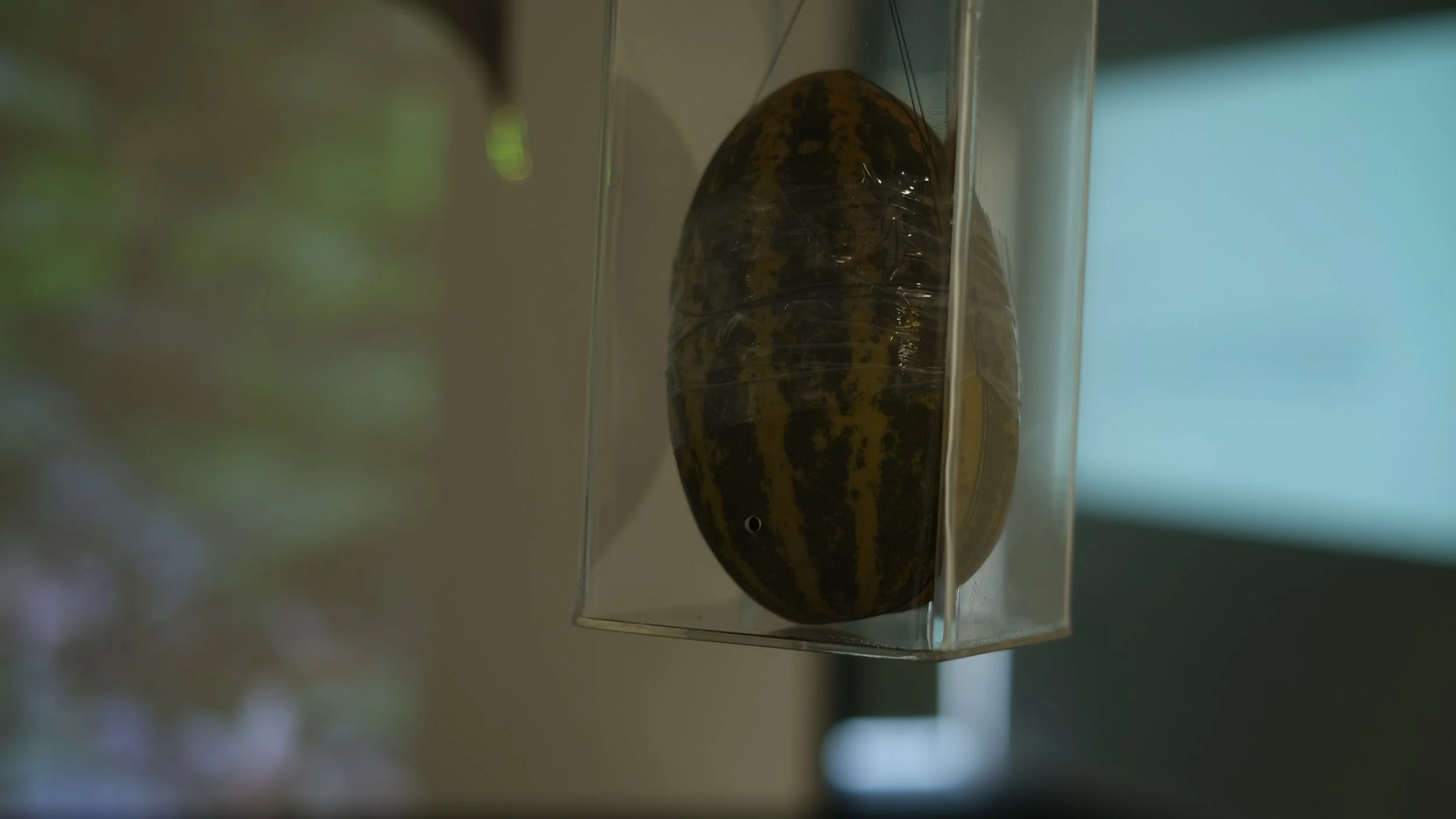
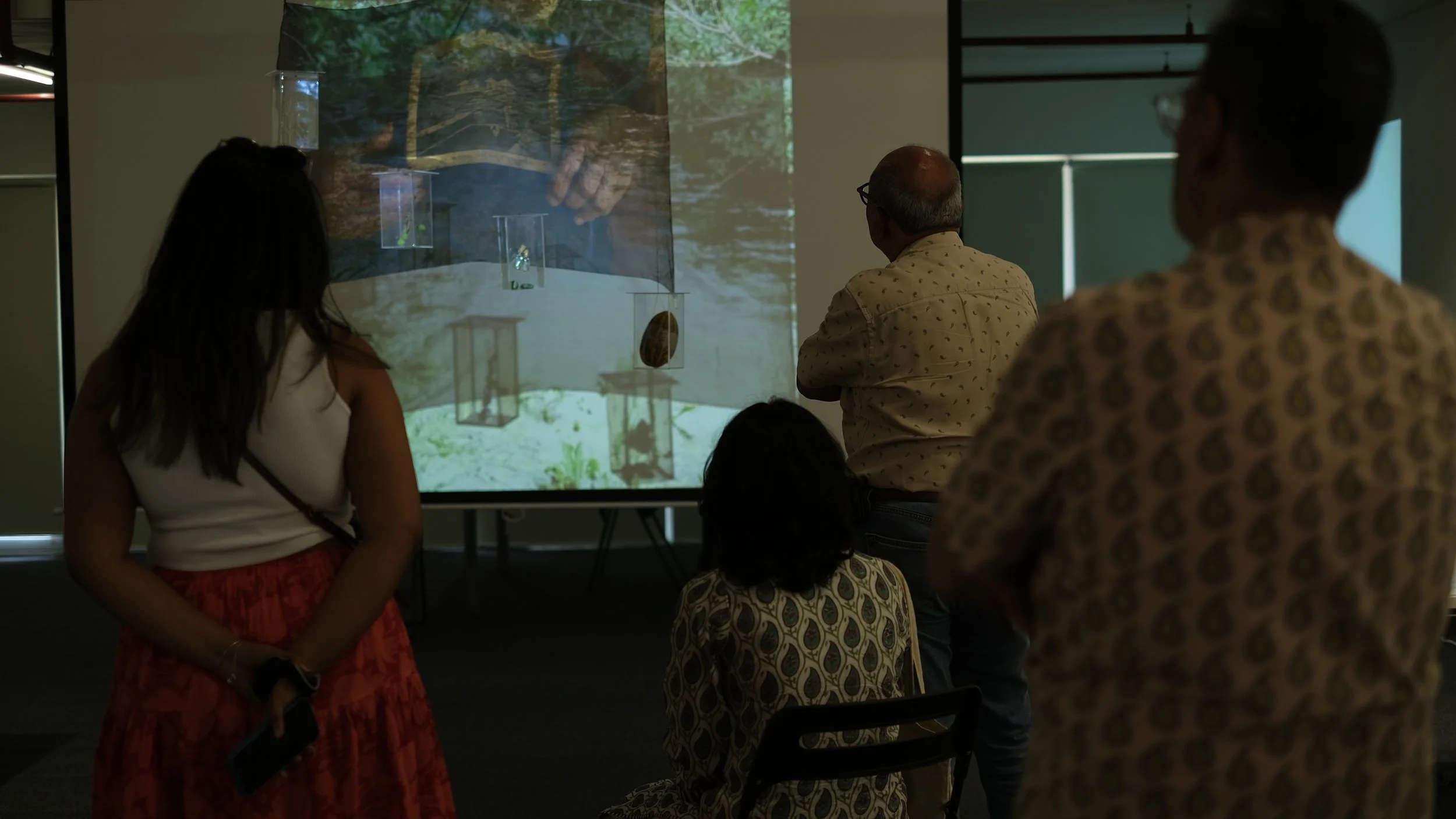
As a result of our field work, we collected objects and oral histories that we then displayed at the Science Gallery in a group exhibition for River Landscapes Workshop.
Benjamin and I have since been working on expanding the scope of the KCA. Our shared interests in colonial histories, land management and biodiversity informs the next phase of the archive. Our goal is to walk the length of the Kaveri and collect stories, objects, and histories that have shaped the very earth that guides the river to the sea.
Exhibition Concept Note:
When we initially began putting the research together, there was a very clear reference across all interviews to the past and the relevance of the Kaveri from a religious, social, and cultural point of view.
We created layers using the objects we collected, images we had taken, and a video that I made of different parts of the Kaveri, Kodagu, and Bangalore.
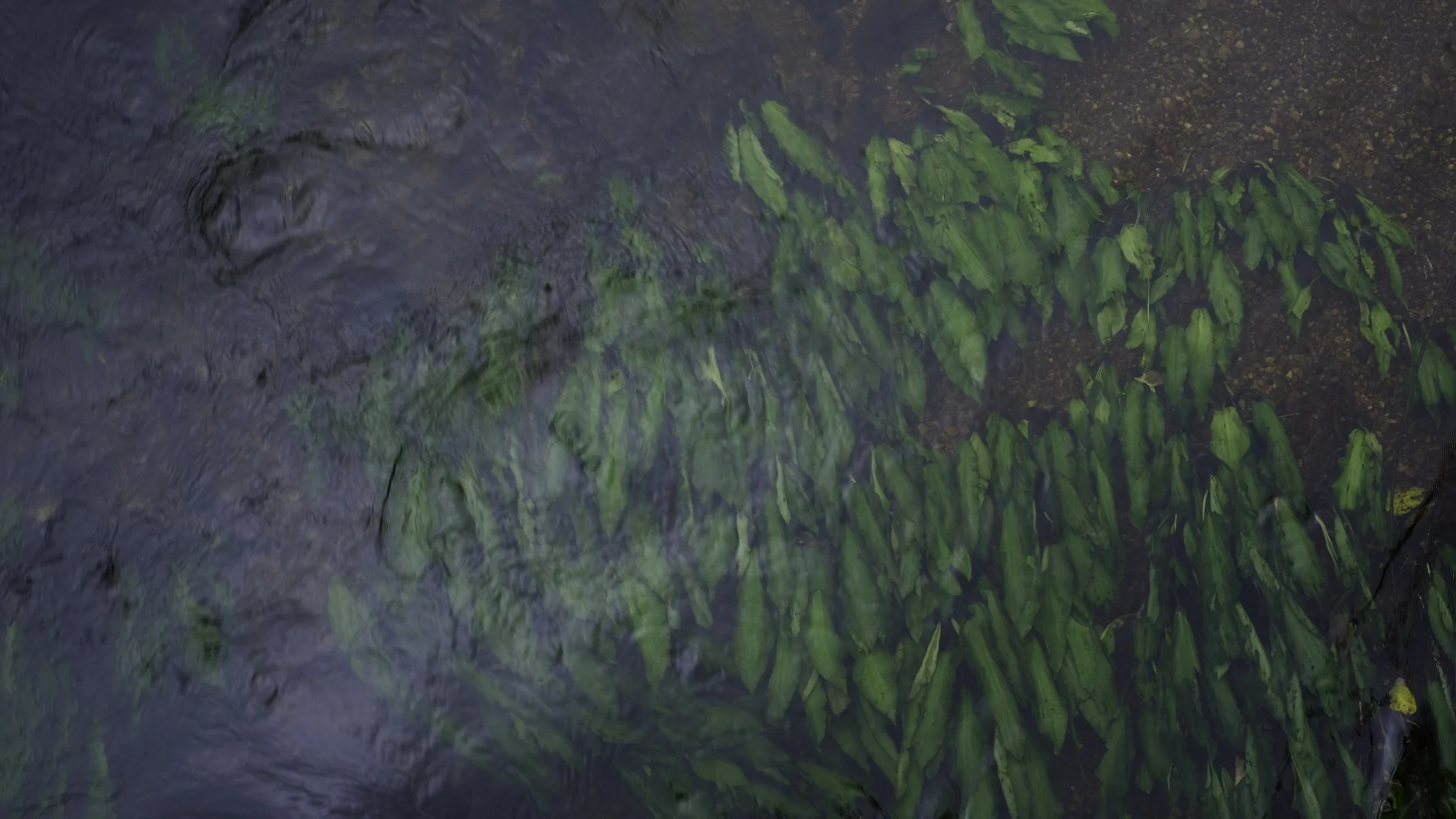
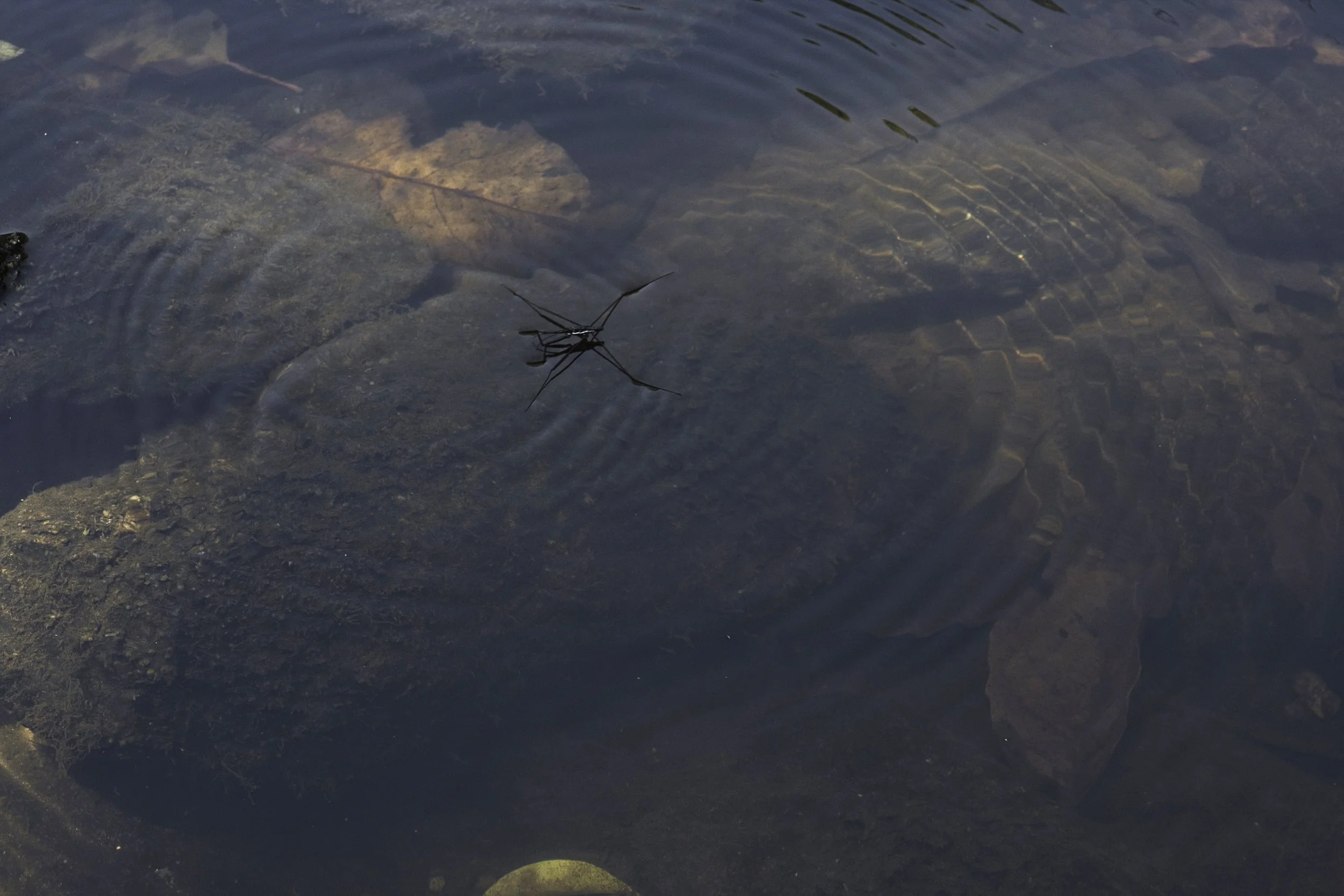
The video was a nod to a possible future. It consisted of a mix old and new footage of the Kaveri alongside clips of different parts of Kodagu and Bangalore.
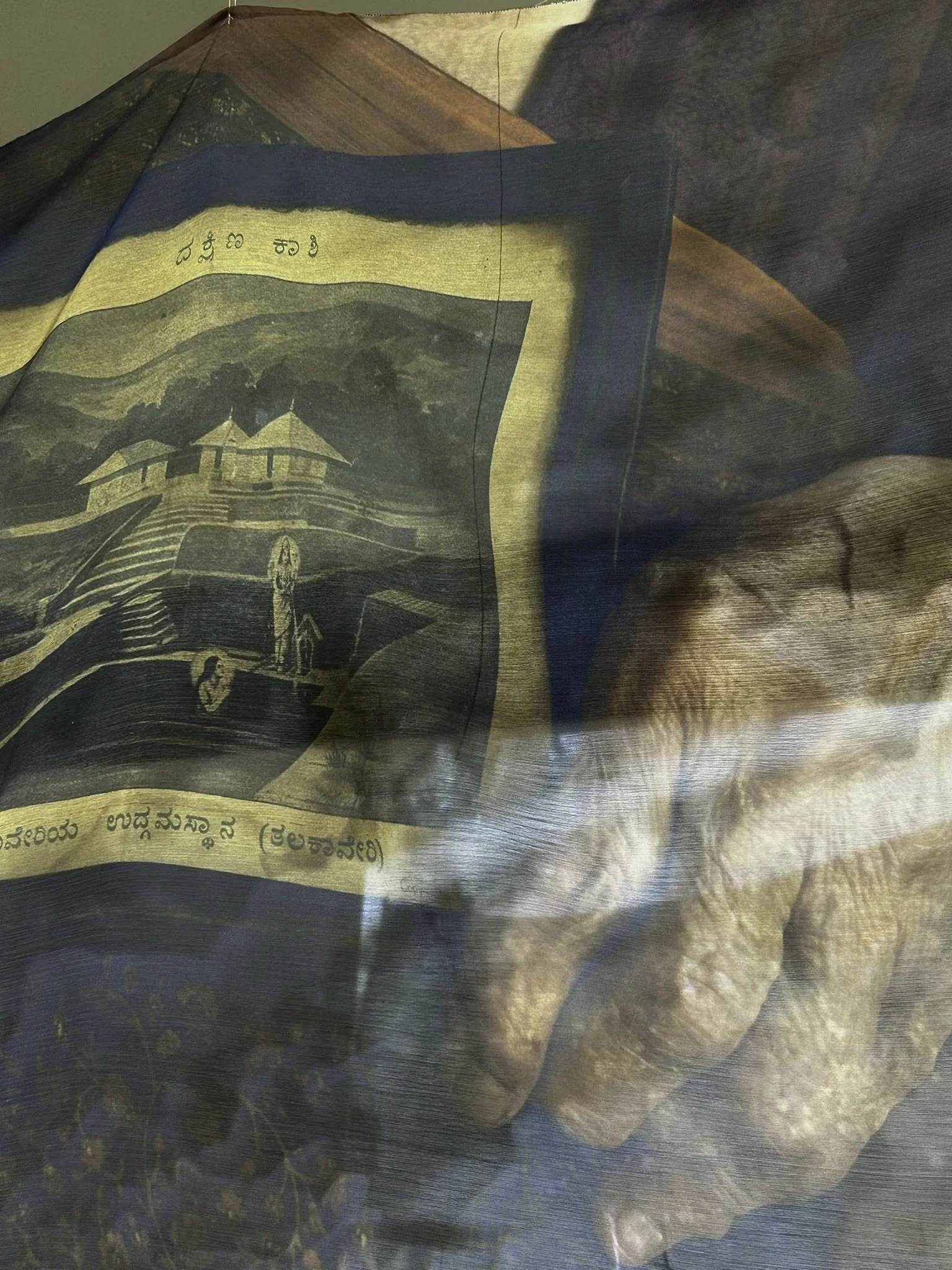
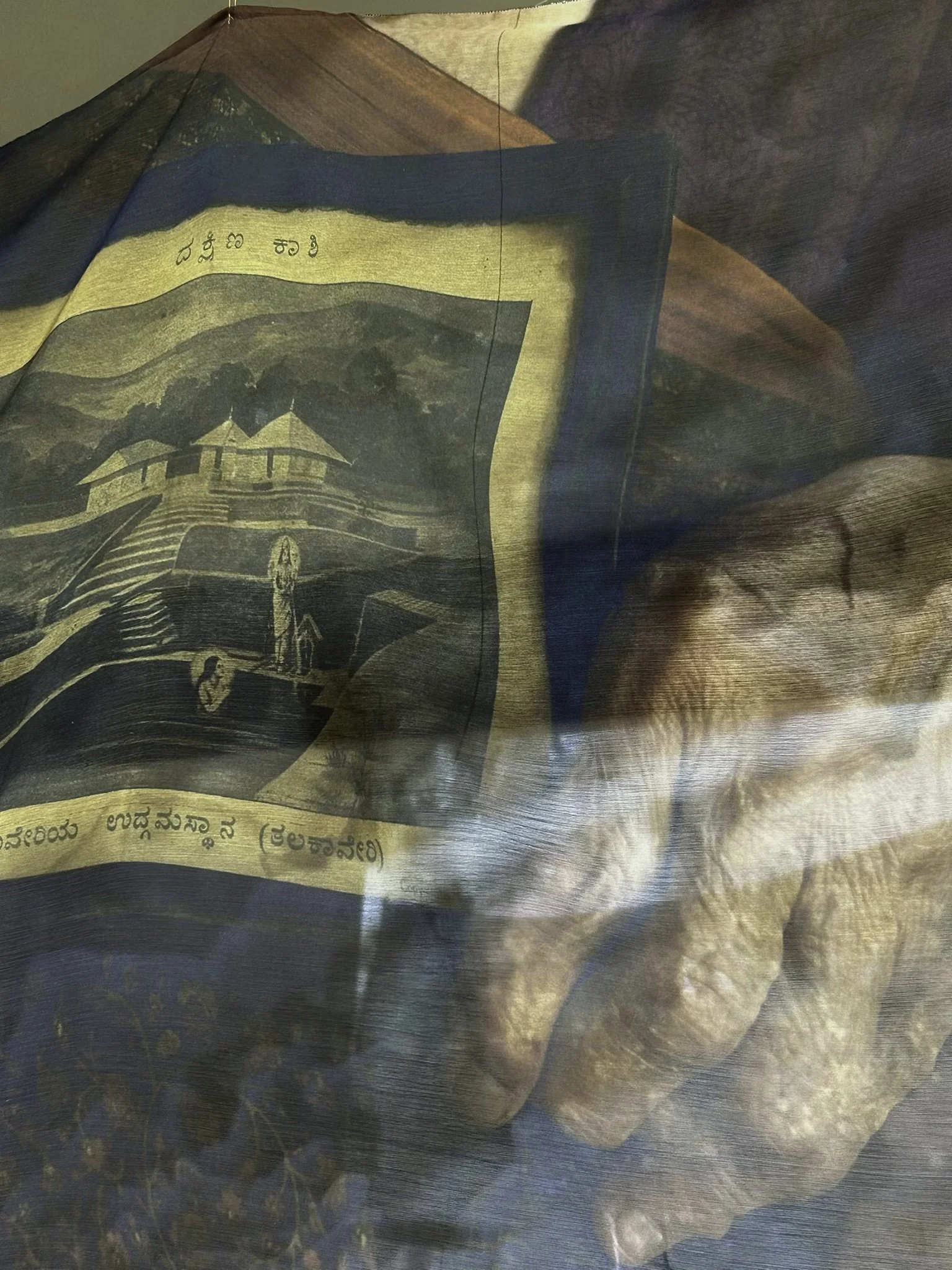
We placed an image of my grandmother holding an oleograph of ‘Talakaveri’ (the birth place of goddess Kaveri) that was presented to her on her wedding day in front of the video. The image was printed on chiffon and was intended to be used as a looking glass.
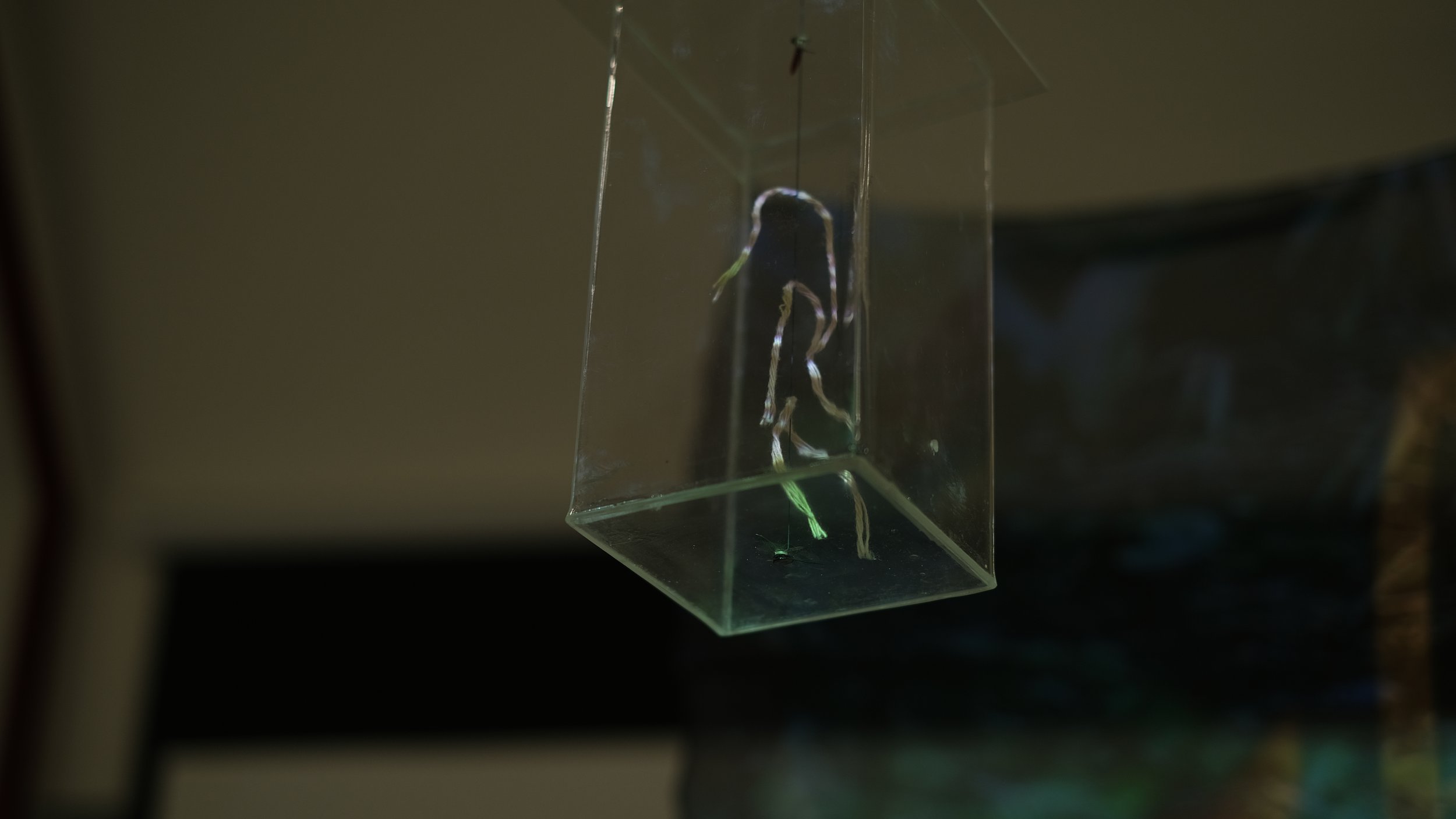
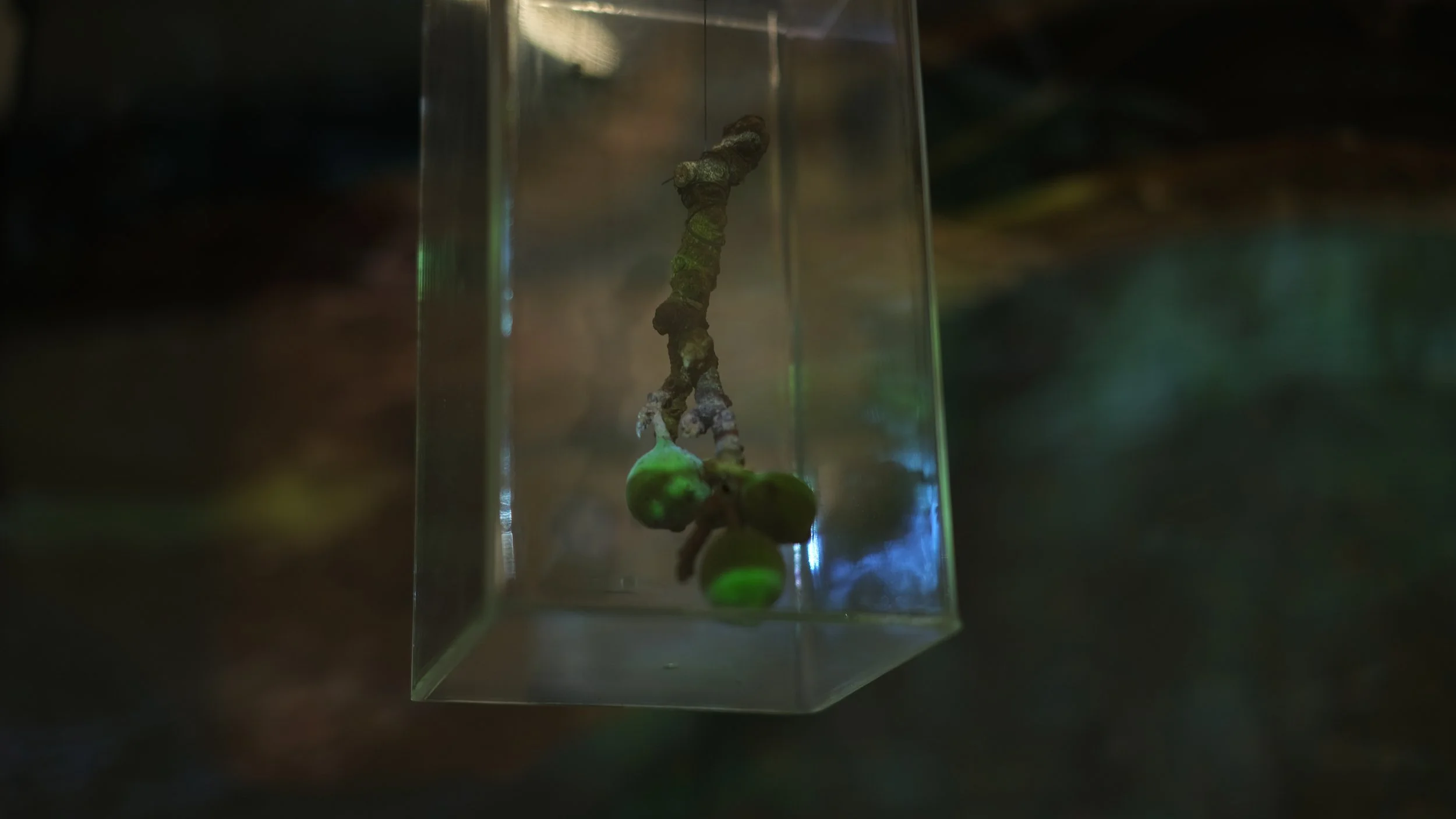
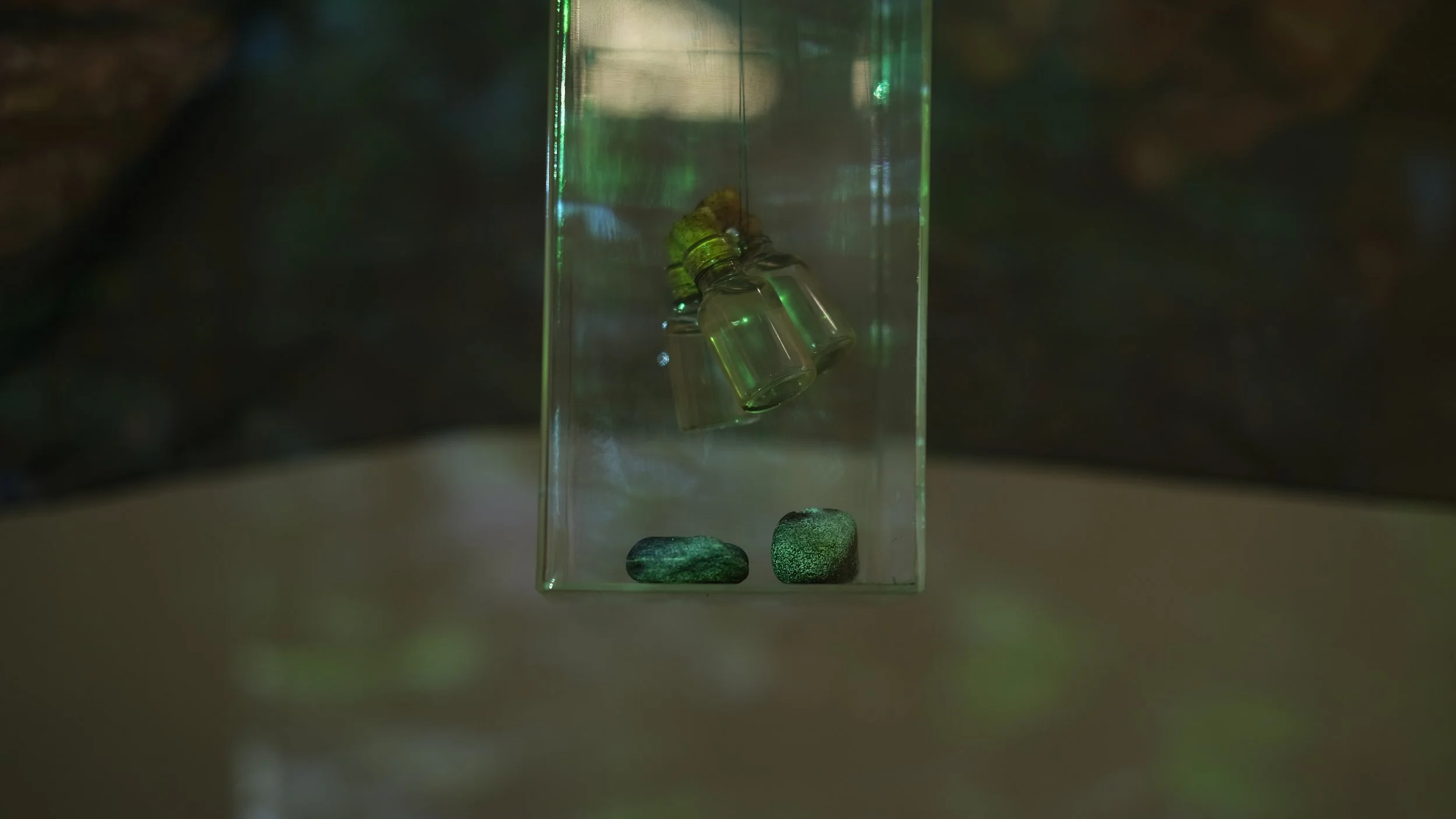
And finally the objects and words were suspended right in front. They served as floating ideas, associations, and words that the river has been carrying for decades. All these words, feelings, moving pictures were meant to be seen and held together.